

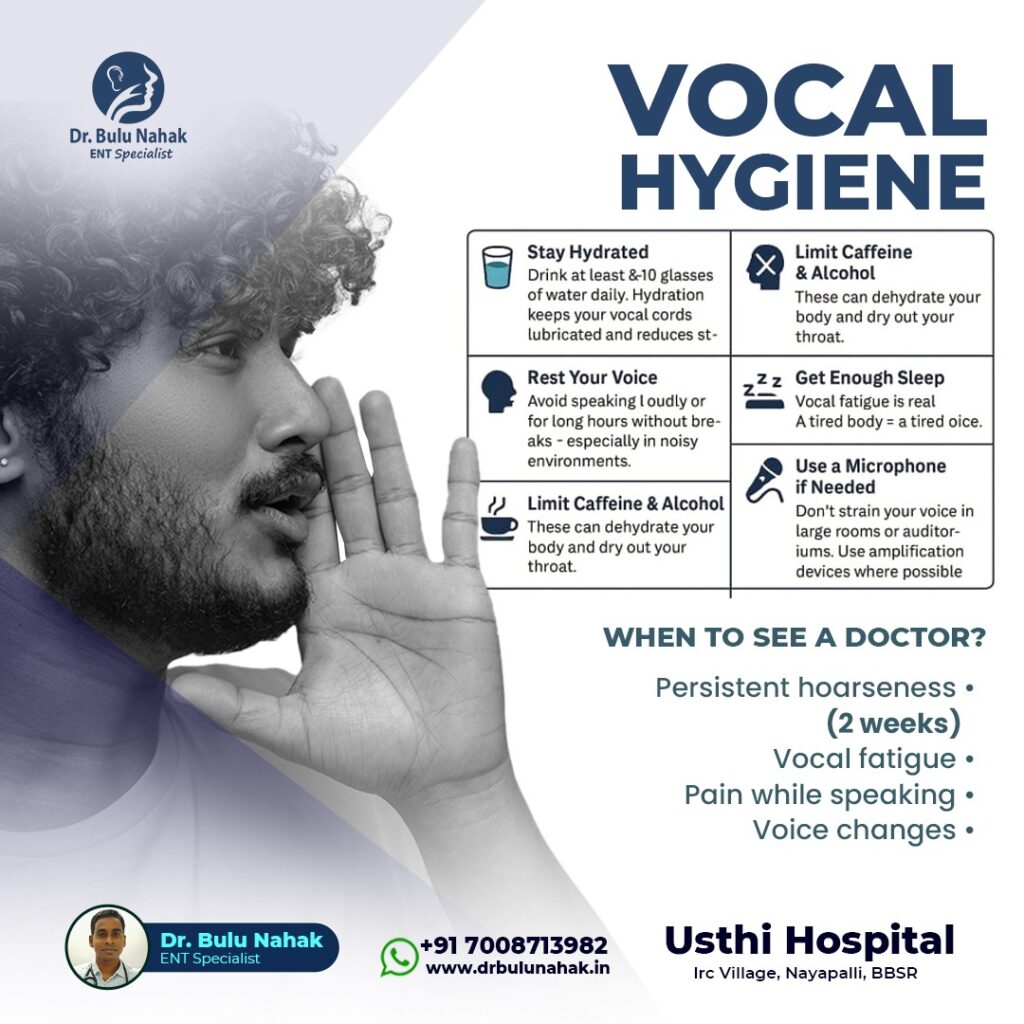
Vocal Hygiene Tips: How to Protect Your Voice and Prevent Hoarseness
Your voice plays an essential role in communication, work, and everyday life. Whether you are a teacher, singer, speaker, student, or professional, maintaining good vocal health is important. Poor voice habits can lead to hoarseness, vocal fatigue, throat discomfort, and long-term voice problems.
Following proper vocal hygiene practices helps protect your vocal cords and maintain a clear, healthy voice. If persistent voice changes occur, consult an ENT doctor in Bhubaneswar for expert evaluation.
What is Vocal Hygiene?
Vocal hygiene refers to healthy habits that help maintain the health of your vocal cords and reduce strain on your voice. Proper voice care prevents irritation and supports optimal vocal performance.
Essential Vocal Hygiene Tips for Better Voice Health
1. Stay Hydrated
Drink approximately 8–10 glasses of water daily. Proper hydration keeps the vocal cords lubricated and reduces irritation caused by dryness.
Hydration is one of the simplest and most effective ways to support healthy vocal function.
2. Rest Your Voice
Avoid speaking loudly or continuously for long periods without breaks. Excessive speaking, especially in noisy environments, can strain your vocal cords.
- Take voice breaks regularly
- Avoid shouting whenever possible
- Reduce unnecessary voice use
3. Limit Caffeine and Alcohol Intake
Excessive caffeine and alcohol can dehydrate the body and dry out the throat. This increases the risk of vocal irritation and voice fatigue.
Balancing hydration and reducing dehydrating beverages can support vocal health.
4. Get Enough Sleep
Vocal fatigue is real. A tired body often leads to a tired voice. Adequate sleep allows your body and vocal cords to recover naturally.
5. Use a Microphone When Needed
When speaking in large rooms, classrooms, or auditoriums, use a microphone whenever possible. Amplification reduces vocal strain and prevents overuse injuries.
Benefits of Maintaining Good Vocal Hygiene
- Reduces risk of hoarseness
- Prevents voice strain
- Improves voice quality
- Supports long-term vocal health
- Reduces vocal fatigue
When Should You Visit an ENT Specialist?
According to the symptoms highlighted in the image, consult a specialist if you experience:
- Persistent hoarseness lasting more than two weeks
- Vocal fatigue
- Pain while speaking
- Noticeable voice changes
Early diagnosis can help identify vocal cord conditions before they worsen.
Voice Care Tips for Professionals
People who use their voices professionally—including teachers, singers, presenters, and public speakers—should be especially careful about vocal hygiene. Regular hydration, scheduled voice rest, and proper speaking techniques can prevent long-term damage.
Conclusion
Good vocal hygiene habits are essential for maintaining a healthy and strong voice. Small lifestyle changes can prevent vocal strain and reduce the risk of voice disorders.
If you experience ongoing hoarseness or voice changes, visit an ENT specialist in Bhubaneswar for expert evaluation and care.
Frequently Asked Questions (FAQs)
1. What is vocal hygiene?
Vocal hygiene includes healthy habits that protect the vocal cords and improve voice quality.
2. How much water should I drink for vocal health?
Drinking 8–10 glasses of water daily can help keep vocal cords hydrated.
3. Can caffeine affect the voice?
Yes, excessive caffeine may dry out the throat and contribute to vocal strain.
4. When should I see a doctor for hoarseness?
Seek medical advice if hoarseness persists beyond two weeks.
5. Can lack of sleep affect voice quality?
Yes. Sleep deprivation can lead to vocal fatigue and reduced voice performance.