

How to Stop Nose Bleeds Quickly: Simple First Aid & Expert Tips
Nosebleeds, also known as epistaxis, can happen suddenly and may feel alarming. However, most nosebleeds are not serious and can be managed easily with the right steps. Understanding how to stop nose bleeds quickly can help prevent panic and ensure proper care.
If nosebleeds occur frequently, it is important to consult an ENT doctor in Bhubaneswar for proper evaluation and treatment.
What Causes Nose Bleeds?
Nosebleeds usually occur due to irritation or damage to the blood vessels inside the nose. They can be triggered by dryness, injury, or underlying health conditions such as high blood pressure.
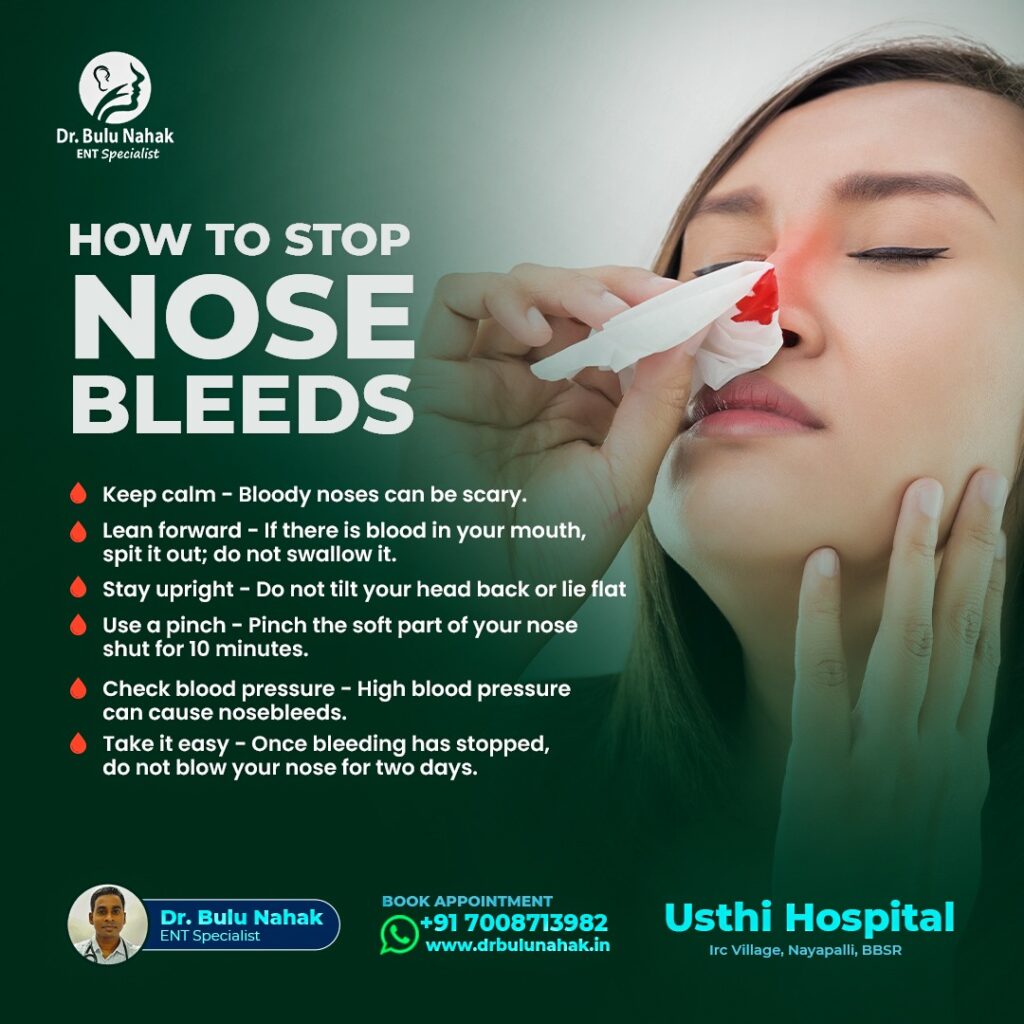
How to Stop Nose Bleeds: Step-by-Step Guide
1. Stay Calm
Nosebleeds can be scary, but staying calm helps control the situation and prevents further complications.
2. Lean Forward
Always lean forward slightly. If blood enters your mouth, spit it out instead of swallowing. This helps prevent nausea and discomfort.
3. Stay Upright
Do not lie down or tilt your head back. Keeping your head upright reduces blood pressure in the nasal veins and helps stop bleeding faster.
4. Pinch Your Nose
- Pinch the soft part of your nose
- Hold firmly for at least 10 minutes
This is the most effective way to stop a nosebleed as it applies pressure to the bleeding vessels.
5. Check Blood Pressure
High blood pressure can contribute to nosebleeds. Monitoring your blood pressure is essential if you experience frequent episodes.
6. Avoid Straining After Bleeding Stops
Once the bleeding stops, avoid blowing your nose for at least two days to prevent recurrence.
Benefits of Proper Nosebleed Management
- Stops bleeding quickly and safely
- Reduces risk of complications
- Prevents recurrence of nosebleeds
- Improves overall nasal health
When to Visit an ENT Specialist?
You should seek medical attention if nosebleeds are frequent, severe, or do not stop within 15–20 minutes. Professional evaluation ensures that any underlying condition is properly treated.
For expert care and treatment, consult an ENT specialist in Bhubaneswar for safe and effective management.
Conclusion
Knowing how to stop a nosebleed can make a significant difference during emergencies. Simple steps like staying calm, leaning forward, and applying pressure can help control bleeding effectively. However, recurring nosebleeds should not be ignored and require professional care.
Frequently Asked Questions (FAQs)
1. How long should I pinch my nose during a nosebleed?
You should pinch your nose for at least 10 minutes continuously without releasing pressure.
2. Should I tilt my head back during a nosebleed?
No, always lean forward to prevent swallowing blood.
3. What causes frequent nosebleeds?
Frequent nosebleeds may be caused by dryness, irritation, or high blood pressure.
4. When should I see a doctor for nosebleeds?
If bleeding lasts more than 20 minutes or happens frequently, consult an ENT specialist.
5. Can high blood pressure cause nosebleeds?
Yes, high blood pressure can increase the risk of nosebleeds.