

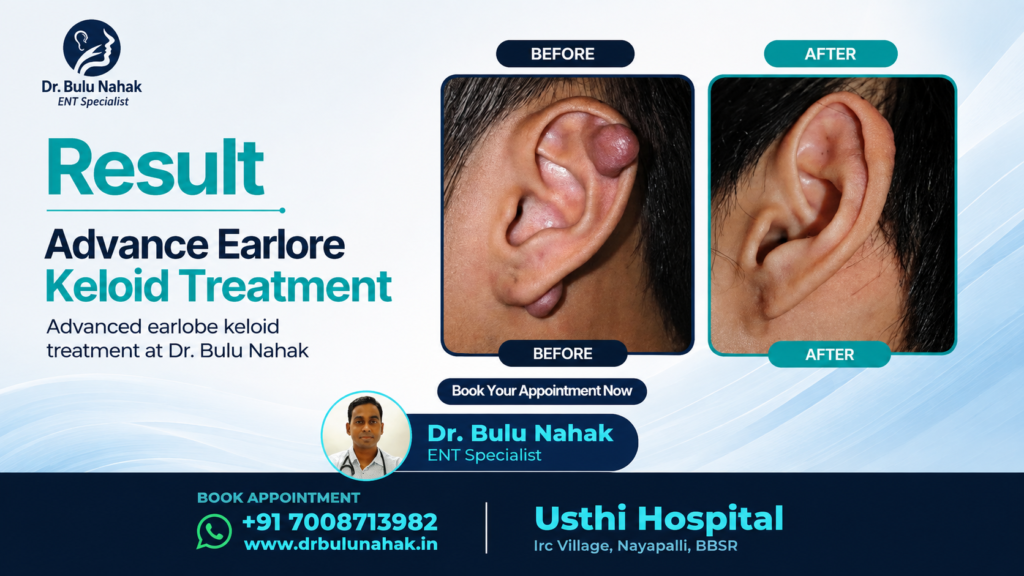
Advanced Earlobe Keloid Treatment in Bhubaneswar: Restore Your Ear’s Natural Appearance
An earlobe keloid treatment in Bhubaneswar can help restore the natural appearance of your ear while reducing discomfort caused by enlarged scar tissue. The image above highlights the visible improvement achieved through advanced earlobe keloid treatment under the care of Dr. Bulu Nahak, ENT Specialist at Usthi Hospital, Bhubaneswar.
Earlobe keloids commonly develop after ear piercing, injury, or surgery. Unlike normal scars, keloids continue growing beyond the original wound and may become cosmetically concerning. Early diagnosis and appropriate treatment significantly improve outcomes while reducing the chances of recurrence.
If you notice a firm, raised swelling around your earlobe piercing or previous injury, consulting an experienced ENT specialist is the first step toward effective management. Modern treatment approaches aim to remove the keloid while preserving the ear’s appearance and minimizing future scar formation.
What Is an Earlobe Keloid?
An earlobe keloid is an overgrowth of scar tissue that forms after the skin heals from an injury such as ear piercing, trauma, burns, or surgery. Instead of stopping once healing is complete, the body continues producing collagen, leading to a raised, firm, and sometimes large scar.
Although keloids are not cancerous, they may continue to enlarge over time, causing cosmetic concerns and occasionally discomfort, itching, tenderness, or pain.
Quick Answer
An earlobe keloid is an abnormal scar that grows beyond the original wound. Advanced ENT treatment can effectively remove or reduce the keloid while improving the appearance of the ear.
Common Causes of Earlobe Keloids
Several factors can contribute to the development of earlobe keloids. Understanding these causes helps individuals take preventive measures after ear piercing or injury.
- Ear piercing
- Previous ear surgery
- Trauma or accidental injury to the ear
- Skin infections affecting the earlobe
- Burn injuries
- Genetic tendency toward excessive scar formation
Signs and Symptoms of an Earlobe Keloid
Recognizing the symptoms early allows timely treatment before the scar becomes significantly larger.
- Raised swelling on the earlobe
- Firm or rubbery scar tissue
- Progressive increase in size
- Itching or irritation
- Tenderness or discomfort
- Cosmetic concern affecting confidence
Who Is More Likely to Develop Earlobe Keloids?
While anyone can develop a keloid, certain individuals have a higher likelihood due to genetics, skin healing patterns, or previous history of abnormal scars.
- People with previous keloids
- Individuals with a family history of keloids
- Those who recently had ear piercings
- Patients recovering from ear surgery or injury
Why Early Treatment Matters
Treating an earlobe keloid in its early stages may help prevent further enlargement and improve cosmetic outcomes. Larger keloids can become more challenging to manage and may require more extensive treatment.
The before-and-after result shown in the image demonstrates how advanced treatment can significantly improve the appearance of the earlobe. Early consultation with an ENT specialist allows for personalized evaluation and appropriate treatment planning.
Advanced Earlobe Keloid Treatment Options
Modern earlobe keloid treatment in Bhubaneswar focuses on reducing the scar while preserving the natural appearance of the ear. Treatment is individualized depending on the size, location, previous treatments, and the patient’s healing response.
The objective is not only to remove the visible keloid but also to reduce the possibility of recurrence through appropriate treatment planning and regular follow-up.
Treatment May Include
- Comprehensive ENT evaluation
- Advanced surgical removal when appropriate
- Post-treatment scar management
- Regular follow-up to monitor healing
- Personalized recommendations to minimize recurrence
Before and After Results: What Do They Show?
The image demonstrates a noticeable improvement following advanced earlobe keloid treatment. The “Before” photograph shows a prominent raised scar involving the upper and lower portions of the earlobe, while the “After” photograph illustrates a smoother, more natural ear contour.
Although every patient heals differently, timely treatment often improves cosmetic appearance, increases confidence, and reduces discomfort associated with enlarged scars.
Benefits Seen After Successful Treatment
- Improved ear appearance
- Reduced scar bulk
- Greater self-confidence
- Better comfort while wearing accessories
- Healthier long-term scar management
Recovery After Earlobe Keloid Treatment
Recovery varies depending on the size of the keloid and the treatment performed. Following your ENT specialist’s instructions is essential for proper healing and reducing the risk of recurrence.
Recovery Tips
- Keep the treated area clean and dry.
- Attend scheduled follow-up appointments.
- Avoid unnecessary pressure on the ear.
- Follow all wound-care instructions carefully.
- Report unusual swelling or discomfort promptly.
Can Earlobe Keloids Be Prevented?
While prevention is not always possible, especially in individuals prone to abnormal scar formation, proper ear care and early medical evaluation can reduce the chances of developing large keloids.
Helpful Prevention Tips
- Choose safe and hygienic ear piercing practices.
- Avoid repeated trauma to the earlobe.
- Seek medical advice if a scar starts enlarging.
- Do not ignore persistent swelling after piercing.
How Do You Know If You Need Earlobe Keloid Treatment?
If you notice a raised scar on your earlobe that continues to enlarge, causes discomfort, or affects your confidence, you should consult an ENT specialist. Early assessment allows timely treatment and improves cosmetic outcomes.
Why Choose an ENT Specialist for Earlobe Keloid Treatment?
ENT specialists are experienced in managing conditions affecting the ear, nose, and throat. Their expertise helps ensure accurate diagnosis, personalized treatment planning, and careful follow-up for optimal healing.
Advantages of Specialist Care
- Comprehensive ear evaluation
- Individualized treatment approach
- Focus on cosmetic and functional outcomes
- Long-term scar monitoring
- Guidance to reduce recurrence risk
When Should You Visit an ENT Specialist?
Schedule an evaluation if you experience any of the following:
- A scar that continues growing after ear piercing.
- Pain, itching, or tenderness around the earlobe.
- Difficulty wearing earrings because of scar tissue.
- Previous unsuccessful treatment.
- Concerns about the appearance of your ear.
Quick Summary
Advanced earlobe keloid treatment is designed to reduce excessive scar tissue, improve the appearance of the ear, and help patients regain confidence. Early diagnosis and treatment can prevent the keloid from becoming larger and more difficult to manage. The before-and-after result shown above demonstrates how timely ENT care can significantly improve cosmetic outcomes. If you notice an enlarging scar after ear piercing or injury, consult an experienced ENT specialist for an appropriate evaluation and personalized treatment plan.
Related Articles You May Like
- When Should You See an ENT Specialist?
- Ear Care Tips for Better Hearing Health
- Common Ear Problems and Their Treatment
Frequently Asked Questions
What is an earlobe keloid?
An earlobe keloid is an abnormal overgrowth of scar tissue that develops after ear piercing, injury, or surgery and extends beyond the original wound.
Can an earlobe keloid disappear on its own?
No. Most earlobe keloids do not disappear without treatment and may continue to enlarge over time.
When should I consult an ENT specialist?
Consult an ENT specialist if you notice a growing scar, pain, itching, cosmetic concerns, or difficulty wearing earrings.
Can an earlobe keloid come back after treatment?
Keloids can recur in some cases. Following your ENT specialist’s advice and attending follow-up appointments can help reduce this risk.
Is early treatment better?
Yes. Early treatment can improve cosmetic outcomes and prevent the scar from becoming larger and more difficult to manage.
Where can I get advanced earlobe keloid treatment in Bhubaneswar?
If you are looking for advanced earlobe keloid treatment in Bhubaneswar, consult Dr. Bulu Nahak, ENT Specialist, at Usthi Hospital for a comprehensive evaluation and personalized treatment plan.
Book Your Appointment Today
Don’t let an earlobe keloid affect your confidence or quality of life. Early evaluation and expert ENT care can make a significant difference. If you have a persistent or enlarging scar after ear piercing or injury, schedule a consultation with Dr. Bulu Nahak, ENT Specialist, at Usthi Hospital, IRC Village, Nayapalli, Bhubaneswar.
📞 Phone: +91 7008713982
🌐 Website: https://drbulunahak.in/
📍 Location: Usthi Hospital, IRC Village, Nayapalli, Bhubaneswar
Disclaimer: This article is intended for educational purposes only and should not replace professional medical advice, diagnosis, or treatment. Always consult a qualified ENT specialist for personalized evaluation and care.