

How to Prevent Nose Bleeding: Expert ENT Tips for Better Nasal Health
Nose bleeding, also known as epistaxis, is one of the most common ENT problems affecting children and adults alike. While most nosebleeds stop on their own, frequent episodes can be uncomfortable, alarming, and sometimes indicate underlying nasal irritation. Fortunately, many cases can be prevented with proper nasal care and healthy daily habits.
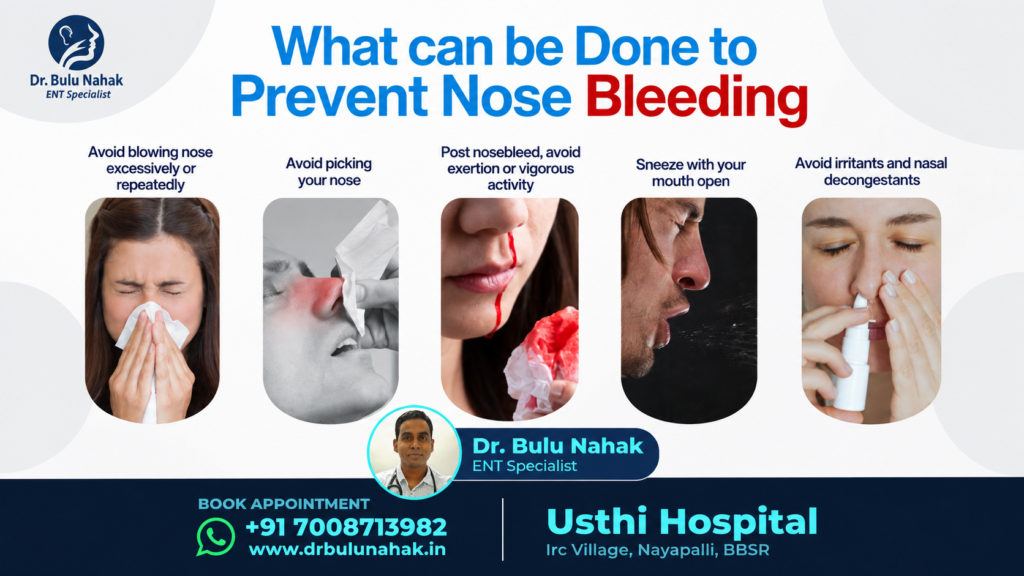
The awareness image from Dr. Bulu Nahak, ENT Specialist highlights several simple yet effective ways to reduce the risk of nose bleeding. These include avoiding excessive nose blowing, not picking the nose, limiting strenuous activities after a nosebleed, sneezing with the mouth open, and avoiding unnecessary nasal irritants.
In this comprehensive guide, you’ll learn practical prevention strategies, understand why nosebleeds occur, discover when medical attention is necessary, and explore expert ENT recommendations for maintaining healthy nasal passages.
What is a Nose Bleed?
A nosebleed occurs when tiny blood vessels inside the nasal lining break and bleed. Because the inside of the nose contains numerous delicate blood vessels close to the surface, even minor irritation can trigger bleeding.
Most nosebleeds are not life-threatening and can often be managed with simple first aid. However, preventing repeated episodes is equally important to protect the sensitive nasal tissues.
Common Reasons Why Nose Bleeding Occurs
- Dry or irritated nasal lining
- Repeated nose blowing
- Frequent nose picking
- Forceful sneezing
- Exposure to dust, smoke, allergens, or other nasal irritants
- Strenuous activity immediately after a recent nosebleed
Why Preventing Nose Bleeding is Important
Although occasional nosebleeds may seem harmless, recurring episodes can interfere with daily life, disrupt sleep, cause anxiety, and indicate ongoing irritation of the nasal lining. Taking preventive measures helps protect delicate blood vessels and reduces the chances of repeated bleeding.
Simple lifestyle changes can significantly improve nasal health while reducing irritation caused by environmental factors and daily habits.
Benefits of Preventing Frequent Nose Bleeding
- Protects delicate nasal blood vessels
- Reduces repeated bleeding episodes
- Supports healthy nasal tissues
- Improves overall breathing comfort
- Minimizes irritation caused by daily habits
Quick Answer
To help prevent nose bleeding, avoid blowing your nose excessively, do not pick your nose, avoid strenuous activity after a nosebleed, sneeze with your mouth open, and minimize exposure to nasal irritants or unnecessary nasal decongestants. Following these simple habits helps protect delicate nasal blood vessels and supports better nasal health.
5 Effective Ways to Prevent Nose Bleeding
Preventing nosebleeds often begins with protecting the delicate lining inside your nose. The awareness poster highlights five simple but highly effective habits that can significantly reduce irritation and lower the risk of repeated bleeding. Following these recommendations consistently can help maintain healthy nasal tissues and improve overall nasal comfort.
1. Avoid Blowing Your Nose Excessively or Repeatedly
Blowing your nose too hard or too frequently can damage the tiny blood vessels inside the nose. Repeated pressure may cause these delicate vessels to rupture, increasing the likelihood of nosebleeds.
Instead of forcefully blowing your nose multiple times, clear your nose gently whenever necessary. Being gentle helps protect the nasal lining while reducing irritation and inflammation.
This simple habit is especially important if you have recently experienced a nosebleed because the tissues are still healing.
Benefits of Gentle Nose Blowing
- Protects delicate nasal blood vessels.
- Reduces repeated irritation.
- Supports faster healing after a nosebleed.
- Improves overall nasal comfort.
2. Avoid Picking Your Nose
One of the most common causes of recurrent nosebleeds is nose picking. Fingernails can easily scratch the sensitive lining of the nose, creating small injuries that bleed repeatedly.
Even minor injuries may take time to heal if the area continues to be disturbed. Avoid touching or scratching the inside of your nose whenever possible.
Parents should also encourage children to avoid this habit because children’s nasal tissues are particularly delicate.
Simple Ways to Break the Habit
- Keep fingernails trimmed.
- Avoid inserting fingers into the nose.
- Follow good nasal hygiene.
- Protect healing nasal tissues.
3. Avoid Vigorous Exercise Immediately After a Nosebleed
After experiencing a nosebleed, the blood vessels inside the nose require time to heal. Strenuous exercise, heavy lifting, intense workouts, or physically demanding activities may increase blood flow and trigger another episode.
Giving your body adequate time to recover reduces the chances of recurrent bleeding and allows damaged blood vessels to heal naturally.
Activities to Avoid Immediately After a Nosebleed
- Heavy lifting.
- Running or intense workouts.
- High-intensity sports.
- Any activity that significantly raises blood pressure.
4. Sneeze with Your Mouth Open
Sneezing creates sudden pressure inside the nasal passages. Holding in a sneeze or sneezing forcefully through the nose can place additional stress on healing blood vessels.
Whenever possible, sneeze naturally with your mouth open. This helps reduce pressure within the nose and minimizes strain on sensitive nasal tissues.
This small adjustment can play an important role in preventing repeated nosebleeds, particularly in individuals recovering from a recent episode.
Advantages of Sneezing with Your Mouth Open
- Reduces pressure inside the nose.
- Protects healing blood vessels.
- Lowers the risk of repeated bleeding.
- Promotes comfortable breathing.
5. Avoid Nasal Irritants and Unnecessary Nasal Decongestants
The nasal lining can become irritated by environmental factors and excessive use of certain nasal products. Smoke, dust, pollution, strong chemical fumes, and other airborne irritants may dry or inflame the nasal passages.
Similarly, frequent or unnecessary use of nasal decongestant sprays may contribute to nasal dryness and irritation. Protecting the nasal lining from these irritants supports long-term nasal health.
Helpful Daily Habits
- Reduce exposure to smoke and pollution.
- Avoid unnecessary nasal sprays unless advised by an ENT specialist.
- Protect your nose from irritating chemicals.
- Practice healthy nasal care every day.
Expert ENT Advice for Long-Term Nosebleed Prevention
Maintaining good nasal hygiene, avoiding habits that damage the nasal lining, and following simple preventive measures can greatly reduce the chances of recurrent nosebleeds. If bleeding becomes frequent, prolonged, or difficult to control, consulting an experienced ENT specialist is recommended for proper evaluation and personalized treatment.
Additional Tips to Reduce the Risk of Nose Bleeding
While the preventive measures shown in the awareness image are highly effective, maintaining good nasal health every day further reduces the chances of recurrent nosebleeds. Small lifestyle changes and proper nasal care can protect the delicate blood vessels inside your nose and keep the nasal lining healthy.
Healthy Habits That Support Nasal Health
- Stay well hydrated throughout the day.
- Protect yourself from dust, smoke and environmental pollutants.
- Practice gentle nasal hygiene.
- Avoid repeatedly touching or rubbing the nose.
- Follow your ENT specialist’s advice after a nosebleed.
When Should You Visit an ENT Specialist?
Although many nosebleeds are minor and stop on their own, frequent or recurrent bleeding should never be ignored. An ENT specialist can evaluate the nasal cavity, identify the underlying cause, and recommend the most appropriate treatment.
Professional assessment is particularly important if nosebleeds occur repeatedly, interfere with daily activities, or become increasingly difficult to control.
You Should Consult an ENT Specialist If:
- You experience repeated nosebleeds.
- Bleeding continues despite first-aid measures.
- Nosebleeds frequently return after healing.
- Nasal irritation affects your daily life.
- You have concerns about your overall nasal health.
Benefits of Early ENT Consultation
Early diagnosis helps identify the reason behind frequent nosebleeds before the condition becomes more troublesome. ENT specialists use detailed nasal examinations to determine the exact source of bleeding and recommend personalized treatment options.
| Benefit | How It Helps |
|---|---|
| Early Diagnosis | Identifies the cause of recurrent nosebleeds. |
| Expert Evaluation | Provides a detailed examination of the nasal cavity. |
| Personalized Treatment | Treatment is based on your individual condition. |
| Long-Term Prevention | Reduces the likelihood of future nosebleeds. |
| Better Quality of Life | Improves comfort and confidence in daily activities. |
Key Takeaways
- Avoid blowing your nose excessively.
- Never pick your nose.
- Rest after experiencing a nosebleed.
- Sneeze with your mouth open to reduce nasal pressure.
- Avoid unnecessary exposure to nasal irritants.
- Seek expert ENT advice if nosebleeds become frequent.
How can you prevent nose bleeding?
The best ways to prevent nose bleeding include avoiding excessive nose blowing, not picking your nose, resting after a nosebleed, sneezing with your mouth open, and avoiding smoke, dust, and unnecessary nasal decongestants. These simple habits help protect the delicate blood vessels inside the nose and reduce the risk of recurrent bleeding.
How do I stop getting frequent nosebleeds?
Avoid nose picking, blow your nose gently, protect your nose from irritants, and consult an ENT specialist if bleeding happens repeatedly.
Can blowing your nose cause bleeding?
Yes. Forceful or repeated nose blowing can damage the small blood vessels inside the nose, increasing the risk of bleeding.
Should I see an ENT for frequent nosebleeds?
Yes. Frequent or recurring nosebleeds should be evaluated by an ENT specialist to determine the underlying cause and recommend appropriate treatment.
Frequently Asked Questions (FAQs)
1. What is the best way to prevent nose bleeding?
The best way to prevent nose bleeding is to avoid excessive nose blowing, do not pick your nose, sneeze with your mouth open, avoid unnecessary nasal irritants, and rest after a nosebleed. These simple habits help protect the delicate blood vessels inside the nose.
2. Can frequent nose blowing cause nosebleeds?
Yes. Repeated or forceful nose blowing can injure tiny blood vessels inside the nasal lining, making nosebleeds more likely. Always blow your nose gently to reduce irritation.
3. Is nose picking a common cause of nose bleeding?
Yes. Nose picking is one of the most common reasons for recurrent nosebleeds because it can scratch the delicate nasal lining and damage small blood vessels.
4. Should I exercise immediately after a nosebleed?
No. Avoid strenuous exercise, heavy lifting, or vigorous physical activity immediately after a nosebleed, as these activities may trigger another bleeding episode.
5. When should I consult an ENT specialist for nosebleeds?
If nosebleeds happen frequently, last longer than expected, or continue despite preventive measures, consult an ENT specialist for a detailed evaluation and appropriate treatment.
6. Can avoiding nasal irritants help prevent nosebleeds?
Yes. Limiting exposure to smoke, dust, pollution, and unnecessary nasal decongestants can help protect the nasal lining and reduce irritation that may lead to bleeding.
Why Choose Dr. Bulu Nahak?
Maintaining healthy nasal passages begins with expert care and timely evaluation. If you experience frequent nosebleeds, persistent nasal discomfort, or recurring irritation, consulting an experienced ENT specialist can help identify the underlying cause and provide the most suitable treatment plan.
Dr. Bulu Nahak, ENT Specialist at Usthi Hospital, IRC Village, Nayapalli, Bhubaneswar, provides comprehensive evaluation and personalized care for a wide range of ear, nose, and throat conditions. Early consultation can help prevent complications and improve your overall nasal health.
Book Your ENT Consultation Today
Don’t ignore frequent nosebleeds or recurring nasal irritation. Early diagnosis and expert treatment can make a significant difference in your comfort and quality of life.
For expert ENT consultation, visit
Dr. Bulu Nahak
at Usthi Hospital, IRC Village, Nayapalli, Bhubaneswar.
📞 Book Appointment: +91 7008713982
Conclusion
Preventing nosebleeds is often possible with simple daily habits. Avoid excessive nose blowing, never pick your nose, rest after a nosebleed, sneeze with your mouth open, and protect your nasal passages from irritants. These measures help preserve the delicate blood vessels inside the nose and reduce the likelihood of recurrent bleeding. If nosebleeds become frequent or persistent, seek advice from an ENT specialist for a thorough evaluation and personalized care.