

Introduction
Itchy ears (also called ear pruritus) is a frustrating condition affecting millions of people worldwide. While often considered minor, persistent ear itching can impact daily life, sleep quality, and overall comfort. Dr. Bulu Nahak, an experienced ENT specialist in Bhubaneswar, explains the most common causes of itchy ears and how to effectively manage this bothersome condition. Understanding the underlying causes is essential for proper treatment and prevention.
What Are Itchy Ears?
Itchy ears refer to persistent itching or irritation inside the ear canal, on the outer ear, or around the ear. The sensation ranges from mild irritation to intense itching that drives patients to scratch constantly. Ironically, scratching often worsens the condition by further irritating already sensitive ear skin.
Key Signs of Itchy Ears:
Constant urge to scratch inside ear canal
Discomfort intensifying during or after water exposure
Itching worse during monsoons or humid weather
Flaking or scaling visible in ear canal
Mild drainage or discharge in severe cases
Temporary hearing changes from swelling or wax buildup
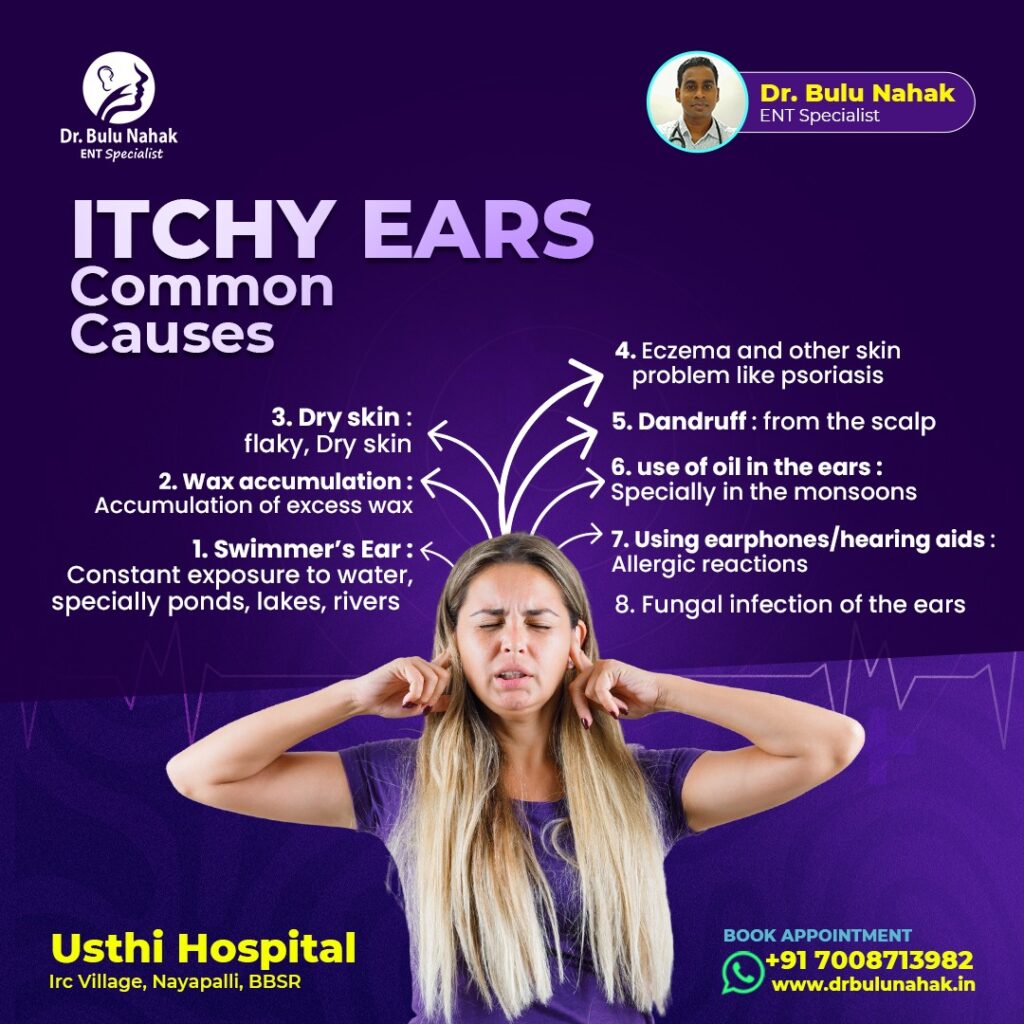
The 8 Most Common Causes of Itchy Ears (Explained by Dr. Bulu Nahak)
1. Swimmer’s Ear (Otitis Externa)
What It Is: Swimmer’s ear, medically called acute otitis externa, is inflammation of the ear canal caused by constant exposure to water—particularly in ponds, lakes, rivers, and pools.
How It Happens: Water becomes trapped in the ear canal, creating a warm, moist environment where bacteria (typically Pseudomonas aeruginosa or Staphylococcus aureus) thrive. The bacteria multiply, causing infection and inflammation of the delicate ear canal skin.
Symptoms Beyond Itching:
Intense itching in ear canal
Ear canal swelling and redness
Ear pain (may be severe)
Mild drainage or discharge
Temporary hearing loss from swelling
Sensation of fullness in affected ear
Prevention & Treatment:
Keep ears dry: use earplugs when swimming, wear cotton with petroleum jelly while bathing
Dry ears thoroughly after water exposure using dry cloth or hair dryer on low setting
Avoid inserting cotton swabs or fingers deep in ear canal
Treatment: antibiotic ear drops, oral antibiotics if severe, pain management
Consult ENT specialist like Dr. Bulu Nahak if symptoms persist beyond 48 hours
Why It’s Common in Bhubaneswar: Bhubaneswar’s humid monsoon climate and proximity to water bodies (lakes, ponds) increase swimmer’s ear risk, particularly during July-September monsoon season.
2. Wax Accumulation (Cerumen Impaction)
What It Is: Earwax (cerumen) naturally lines the ear canal, protecting and lubricating it. However, excessive wax accumulation can trap bacteria and fungi, causing persistent itching.
Why Wax Accumulates:
Narrow ear canals (some people naturally have smaller canals)
Improper ear cleaning (pushing wax deeper instead of removing it)
Cotton swab use (major culprit—forces wax deeper into canal)
Aging (ear canal produces more wax with age)
Hearing aid or earbud use (obstructs natural wax drainage)
Excessive ear cleaning attempts
Symptoms:
Intense itching inside ear canal
Sensation of fullness or blockage
Hearing loss (sounds muffled or distant)
Ear pain or discomfort
Tinnitus (ringing in affected ear)
Dizziness in some cases
Safe Management:
Never use cotton swabs (they push wax deeper)
Use over-the-counter ear drops (carbamide peroxide) to soften wax
Consult Dr. Bulu Nahak for safe professional wax removal through suction or curette
Avoid self-cleaning attempts that can cause trauma
Professional Removal: Dr. Bulu Nahak safely removes impacted wax using specialized instruments under visualization, providing immediate relief.
3. Dry Skin in Ear Canal (Otitis Externa Sicca)
What It Is: Dry, flaky skin in the ear canal causes persistent itching—similar to dry skin elsewhere on body but more bothersome due to ear canal sensitivity.
Why Ears Get Dry:
Climate: dry air, low humidity (especially in winter, air-conditioned environments)
Over-cleaning: excessive washing removes protective oils
Hearing aid use: blocks air circulation, traps moisture, causes skin dryness
Underlying skin conditions: eczema, psoriasis, seborrheic dermatitis
Aging: ear canal skin produces less natural oil with age
Harsh soaps or water exposure removing protective oils
Symptoms:
Intense itching in ear canal
Visible flaking or scaling
Discomfort wearing earbuds or hearing aids
Worse after showering or swimming
No drainage or discharge (unlike infection)
Management:
Gentle ear care: avoid aggressive cleaning
Moisturizing ear drops: prescribed by ENT specialist
Avoid hearing aids or use protective foam sleeves
Treat underlying skin conditions (eczema, psoriasis)
Humidifier in bedroom helps in dry environments
Protect ears during water exposure
4. Eczema and Skin Conditions (Dermatitis)
What It Is: Eczema and other skin conditions (psoriasis, contact dermatitis, seborrheic dermatitis) can affect ear skin, causing itching, redness, and flaking.
Affected Areas:
Inner ear canal
Outer ear (auricle)
Behind ears
Ear lobe
Why Ears Are Vulnerable:
Thin, sensitive skin in ear canal
Limited air circulation traps moisture and irritants
Frequent scratching worsens inflammation
Hearing aid or earbud pressure irritates sensitive skin
Exposure to allergens (nickel in earrings, metals in hearing aids)
Symptoms:
Intense itching (sometimes unbearable)
Redness and visible inflammation
Flaking or scaling skin
Possible drainage if infection develops
Itching worse at night
Itch-scratch cycle (scratching worsens itching)
Management:
Identify and avoid triggers (allergens, irritants)
Anti-inflammatory ear drops prescribed by specialist
Topical steroids (carefully applied to avoid prolonged use)
Moisturizing treatments
Allergy testing if contact dermatitis suspected
Avoid harsh soaps and frequent water exposure
Keep nails trimmed to prevent damage from scratching
5. Dandruff from Scalp (Seborrheic Dermatitis)
What It Is: Dandruff on the scalp can migrate into ear canal and behind ears, causing itching and flaking.
Why It Affects Ears:
Scalp skin extends into ear canal
Seborrheic dermatitis (fungal condition) commonly affects areas with oil-secreting glands
Flaking skin migrates into ear canal with head movement
Fungal spores can cause irritation
Symptoms:
Itching in ear canal and behind ears
Visible white flaking (from scalp dandruff)
Worse in winter or with stress
Associated scalp itching and flaking
Oily appearance of affected areas
Management:
Treat scalp dandruff with anti-dandruff shampoos
Address underlying seborrheic dermatitis (fungal condition)
Antifungal creams for affected areas
Regular gentle hair washing
Avoid excessive scratching of scalp
Manage stress (flare-ups associated with stress)
Consult dermatologist for persistent cases
6. Use of Oils in Ears (Particularly During Monsoons)
What It Is: Application of oils in ears (common in Ayurvedic and traditional medicine) can cause itching, especially during monsoon season when oils remain in canal longer due to humidity.
Why Oils Cause Problems:
Moisture Trap: Oils retain moisture in ear canal, creating environment for bacteria/fungal growth
Wax Interaction: Oil mixes with earwax, causing blockage and itching
Bacterial Growth: Warm, moist, oily environment perfect for bacterial/fungal proliferation
Allergic Reaction: Some people allergic to specific oils (coconut oil, sesame oil, neem oil)
Monsoon Effect: Monsoon humidity intensifies oil effects, increasing itching
Impaired Drainage: Oil prevents natural canal drainage, trapping moisture
Monsoon Concerns in Bhubaneswar:
Bhubaneswar’s monsoon season (July-September) brings increased humidity. Combined with ear oil use, this significantly increases risk of otitis externa and itching.
Management:
Avoid applying oils directly into ear canal
If using oils for ear health, apply only to outer ear and gently wipe
Never push oil deep into canal
Dry ears thoroughly after oil application
Use oil-free moisturizers if canal is dry
Consult Dr. Bulu Nahak if itching develops after oil use
Consider antifungal drops if oil-induced itching occurs
7. Earplugs, Hearing Aids, or Earbud Use (Allergic Reactions)
What It Is: Hearing aids, earbuds, and earplugs can cause ear canal itching through physical irritation, allergic reactions to materials, or by creating moist environment promoting infection.
Mechanisms of Itching:
Physical Irritation: Constant contact and pressure on sensitive canal skin
Material Allergy: Allergic reaction to acrylic, silicone, or metal components
Moisture Trap: Devices block air circulation, trapping moisture and promoting bacterial/fungal growth
Wax Buildup: Devices obstruct natural wax drainage, causing accumulation and itching
Bacteria Colonization: Damp environment under devices creates ideal bacterial habitat
Foam Sleeves: Cheap foam deteriorates, releasing irritating particles
Common Culprits:
Hearing aid materials (acrylic, plastic, metal)
Earbud silicone sleeves (especially cheap quality)
Earplug foam materials
Nickel in hearing aid components
Poor hygiene of devices (bacterial accumulation)
Symptoms:
Itching specifically where device contacts ear canal
Redness of ear canal
Possible discharge if infection develops
Itching worse with prolonged device use
Relief when device removed
Prevention & Management:
Clean devices daily with dry cloth
Allow ear canals to breathe: remove devices regularly
Use protective foam sleeves (premium quality, replaced regularly)
Try different material devices if allergic to current material
Apply moisture-absorbing powder if excessive moisture
Consult ENT for persistent itching despite device cleaning
Consider switching to bone conduction hearing aids (don’t block ear canal)
8. Fungal Infection of Ears (Otomycosis)
What It Is: Fungal infection of the ear canal, usually caused by Candida or Aspergillus species, causing intense itching and discharge.
Risk Factors:
Warm, humid climate (Bhubaneswar’s monsoon)
Moisture in ear canal (water exposure, humidity, oils)
Weak immune system
Diabetes (increased fungal susceptibility)
Previous antibiotic ear drop use (disrupts normal bacteria, allowing fungal overgrowth)
Chronic skin conditions
Poor ear hygiene
Symptoms:
Intense itching (often worse than bacterial infections)
Thick, crumbly white or dark discharge
Ear canal inflammation and redness
Possible ear pain
Temporary hearing loss from discharge buildup
Sensation of fullness
May have odor or foul smell
Why Fungal Infections Are Serious:
Difficult to treat (fungi resistant to common antibiotics)
Can spread if untreated
Discharge damage eardrum if prolific
May require prolonged treatment
Can recur if underlying cause not addressed
Professional Treatment Required:
Antifungal ear drops (different from antibiotic drops)
Ear cleaning to remove infected discharge
Oral antifungal medications in severe cases
Address underlying moisture or immune issues
Dr. Bulu Nahak identifies fungal species and prescribes appropriate antifungal treatment
May require 2-4 weeks treatment
Prevention:
Keep ears dry, especially during monsoon
Avoid oils and moisture-trapping substances
Treat underlying conditions (diabetes, weak immunity)
Don’t use old antibiotic drops prolonged without specialist guidance
Manage humidity in living environment
When to Consult Dr. Bulu Nahak (ENT Specialist)
Seek professional evaluation if:
Itching persists more than 1-2 weeks despite home care
Itching accompanied by pain or discharge
Hearing loss develops
Visible redness or swelling in ear canal
Itching affects sleep or daily activities
Signs of infection (fever, drainage)
Itching after water exposure (persistent)
Self-treatment worsens symptoms
Itching in both ears (suggests systemic cause)
Discharge has unusual color or odor
Diagnosis & Professional Treatment at Usthi Hospital
Dr. Bulu Nahak provides comprehensive evaluation:
Otoscopic Examination: Detailed visualization of ear canal using otoscope, identifying redness, scaling, discharge, wax, or fungal growth
Detailed History: Understanding onset, triggers, previous treatments, water exposure, hearing aid use
Possible Testing: Culturing discharge if infection suspected, audiometry if hearing loss present
Targeted Treatment: Based on identified cause:
Antibiotic drops (bacterial infection)
Antifungal drops (fungal infection)
Steroid drops (inflammation)
Earwax removal (impaction)
Moisture management strategies
Preventive Counseling: Education on cause and prevention strategies
Home Care & Prevention Tips
Keep Ears Dry
Use earplugs or cotton with petroleum jelly while bathing
Dry ears thoroughly after water exposure
Use hair dryer on low setting to dry ear canals gently
Avoid prolonged time in humid environments
Proper Ear Hygiene
Never use cotton swabs inside ear canal (they push wax deeper and cause trauma)
Wipe outer ear with clean cloth
Avoid inserting anything into ear canal
Clean external ears gently during bathing
Avoid Irritants
Don’t apply oils directly into ear canal
Avoid loud noise that can irritate ears
Minimize hearing aid/earbud use if prone to itching
Clean hearing aids and earbuds daily
Environmental Management
Use humidifier in dry climates
Avoid excessively hot environments
Minimize exposure to dust and irritants
Keep living spaces clean to reduce fungal spores
General Health
Manage allergies and skin conditions
Control diabetes (increases fungal infection risk)
Reduce stress (exacerbates many skin conditions)
Maintain strong immune system through diet and sleep
FAQ: Itchy Ears – Common Questions Answered
Q1: Is itchy ear a sign of serious disease?
A: Usually no. Most itchy ear cases result from common, treatable conditions like wax buildup, dry skin, or swimmer’s ear. However, persistent itching requires professional evaluation to rule out infection or underlying conditions like eczema or fungal infection. Untreated fungal infections or severe dermatitis can progress, making professional assessment important.
Q2: Can I use home remedies to treat itchy ears?
A: Some home remedies help mild itching: hydrogen peroxide drops (softens wax), apple cider vinegar drops (antibacterial—though acidic, use cautiously), or saline drops. However, these work only for specific causes. Incorrect self-treatment can worsen conditions. Consult Dr. Bulu Nahak if itching persists beyond 1-2 weeks or worsens.
Q3: Why are my ears itchy during monsoon season?
A: Monsoon brings increased humidity in Bhubaneswar (July-September), creating warm, moist environment ideal for bacterial and fungal growth. Increased water exposure (rainfall, bathing in water bodies) combined with humidity significantly increases infection risk. Prevention: keep ears dry, avoid oils, use earplugs.
Q4: Is earwax removal safe?
A: Professional earwax removal by Dr. Bulu Nahak is very safe using specialized instruments and visualization. Home removal attempts with cotton swabs, bobby pins, or other objects risk eardrum perforation and canal trauma. Never attempt self-removal of impacted wax.
Q5: Can hearing aids cause permanent itching?
A: Hearing aids usually don’t cause permanent damage, but can cause chronic itching if ear canal skin irritated. Solutions: use premium foam sleeves, clean devices daily, remove devices for breaks, switch materials if allergic, or consult Dr. Bulu Nahak about alternative hearing solutions.
Q6: What’s the difference between itchy ears from infection vs. dry skin?
A: Infection typically causes: drainage, pain, redness, and worse with water exposure. Dry skin causes: itching, scaling, no discharge, and worse in dry climates or after showering. Dr. Bulu Nahak’s examination determines the cause through otoscopy and detailed history.
Q7: How long does itchy ear treatment take?
A: Recovery time varies: simple wax removal provides immediate relief; swimmer’s ear with antibiotic drops improves in 3-7 days; fungal infections require 2-4 weeks antifungal treatment; eczema management ongoing. Most conditions show improvement within 1-2 weeks with proper treatment.
Q8: Can itchy ears affect hearing?
A: Yes, severe itching from wax impaction, swelling from infection, or fungal discharge can cause temporary hearing loss. Hearing typically returns once underlying cause treated and canal clears. Consult Dr. Bulu Nahak if itching accompanies hearing changes.
Q9: Is it normal to have itchy ears in both ears?
A: Bilateral itching suggests systemic cause rather than local infection: eczema, psoriasis, dry skin, dandruff, or allergies. Unilateral (one-sided) itching suggests local cause like infection or wax buildup. Professional evaluation helps identify cause.
Q10: Can I prevent itchy ears while still using earbuds?
A: Yes: use premium quality silicone sleeves, replace foam regularly, clean earbuds daily, remove earbuds frequently for ear breathing, limit daily use duration, allow ears break time. Consider bone conduction headphones that don’t block ear canal. If itching persists, consult Dr. Bulu Nahak about alternatives.
Conclusion
Itchy ears, while usually not serious, significantly impact quality of life if left untreated. Understanding the eight common causes—swimmer’s ear, wax accumulation, dry skin, eczema, dandruff, oils, hearing aid use, and fungal infection—helps patients take appropriate preventive measures and seek timely professional care.
Dr. Bulu Nahak, an experienced ENT specialist at Usthi Hospital in Bhubaneswar, provides comprehensive diagnosis and targeted treatment addressing the underlying cause, not just symptoms. Whether your itchy ears result from monsoon humidity, hearing aid use, or underlying skin conditions, professional evaluation ensures proper diagnosis and effective management.
Don’t suffer through itchy ears. Contact Dr. Bulu Nahak today for expert ENT care and relief.
Contact Dr. Bulu Nahak for Itchy Ear Treatment
📞 Phone: +91 7008713982
🏥 Location: USTHI Hospital, Plot No N4_1/1, N4, Block N4, IRC Village, Nayapalli, Bhubaneswar, Odisha 751015
🌐 Website: www.drbulunahak.in
⏰ Hours: Mon-Wed, Fri-Sat: 10 AM-7:30 PM