

Natural Ways to Care for Your Ears and Support Better Hearing Clarity
Healthy ears play an important role in communication, hearing, balance, and everyday quality of life. Simple habits such as keeping the outer ear clean, avoiding loud noise, managing earwax properly, and getting regular ear checkups can help support overall ear health. If you experience persistent hearing difficulty, ear discomfort, blocked ears, or other unusual symptoms, an evaluation by an ENT Specialist can help identify the underlying cause.
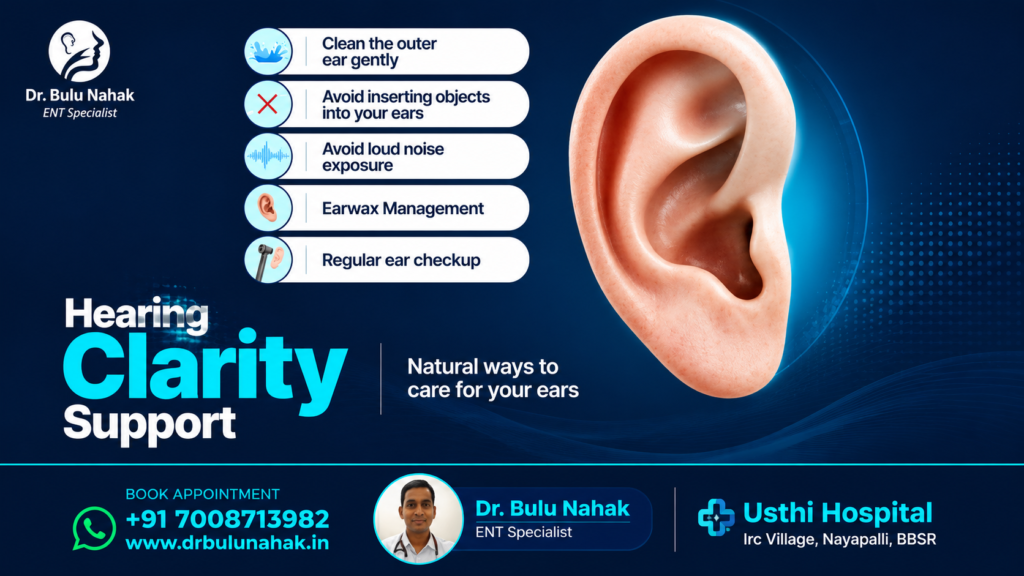
The image highlights five practical ear-care habits: cleaning the outer ear gently, avoiding inserting objects into the ears, reducing exposure to loud noise, managing earwax appropriately, and maintaining regular ear checkups. These simple steps can form the foundation of a healthy ear-care routine.
What Are the Best Ways to Care for Your Ears?
The best everyday ear-care habits include gently cleaning only the outer ear, avoiding objects inside the ear canal, protecting your ears from excessive noise, managing earwax safely, and attending regular ear checkups when appropriate. These habits can help reduce avoidable irritation and support healthy hearing.
- Clean the outer ear gently.
- Avoid inserting objects into your ears.
- Limit exposure to loud noise.
- Manage earwax appropriately.
- Consider regular ear checkups, particularly when you have hearing or ear-related concerns.
1. Clean the Outer Ear Gently
The outer part of the ear can be cleaned gently as part of normal personal hygiene. However, ear care should focus on the external ear rather than aggressively cleaning inside the ear canal.
Why Gentle Ear Cleaning Matters
The ear is a sensitive structure. Excessive rubbing, scratching, or aggressive cleaning may irritate the delicate skin around the ear. A gentle approach is therefore preferable for routine ear hygiene.
For everyday care, keep the outer ear clean and avoid unnecessary manipulation of the ear canal. If you feel that your ears are blocked or your hearing has changed, professional assessment is preferable to repeated self-cleaning.
2. Avoid Inserting Objects Into Your Ears
One of the most important ear-care habits is to avoid putting objects inside the ear canal. Objects used for cleaning can potentially irritate the ear or cause injury when inserted too deeply.
Why You Should Avoid Putting Objects in the Ear
- It can irritate the delicate skin of the ear canal.
- Improper cleaning may push earwax deeper into the canal.
- Deep insertion can potentially cause injury.
- Repeated cleaning may create unnecessary irritation.
If you feel that something is blocking your ear, avoid attempting to remove it with an object. Instead, consult an ENT doctor for appropriate evaluation.
3. Protect Your Ears From Loud Noise
Regular exposure to loud noise can place stress on the hearing system. Protecting your ears from excessive noise is therefore an important part of long-term hearing care.
Common Situations Where Noise Protection Matters
- Very loud music or concerts
- High-volume headphones or earphones
- Loud workplace environments
- Powerful machinery and equipment
- Repeated exposure to very loud sounds
If you regularly spend time in a noisy environment, consider appropriate hearing protection and reduce unnecessary exposure whenever possible. Keeping listening volume at a comfortable level is another simple habit that supports better hearing hygiene.
4. Understand Proper Earwax Management
Earwax is a normal substance produced in the ear canal. Problems can arise when wax accumulates and causes symptoms such as a blocked sensation or changes in hearing. Proper earwax management should therefore focus on safe and appropriate removal rather than frequent or aggressive cleaning.
Can Earwax Affect Hearing?
Yes. Excessive earwax can sometimes contribute to a feeling of blockage or reduced hearing. However, not every blocked-ear sensation is caused by earwax. Other ear conditions can produce similar symptoms.
If you suspect excessive earwax, avoid inserting objects into your ear to remove it. An ENT professional can examine the ear and determine whether earwax is actually responsible for the symptoms.
5. Regular Ear Checkups Can Support Ear Health
Regular ear checkups can be useful when you have ongoing hearing concerns, recurring ear symptoms, or other problems affecting your ears. An ENT examination can help assess the ear and identify possible causes of hearing or ear-related symptoms.
When Should You Consider an ENT Ear Checkup?
Consider seeking professional advice if you notice persistent or recurring symptoms such as:
- Difficulty hearing clearly
- A persistent blocked-ear sensation
- Excessive earwax concerns
- Recurring ear discomfort
- Changes in hearing
- Other persistent ear-related symptoms
Early professional evaluation can help determine whether the symptoms are related to earwax, noise exposure, irritation, infection, or another underlying ear condition.
Simple Daily Ear-Care Routine for Better Hearing Health
Good ear hygiene does not need to be complicated. A simple routine can help you take better care of your ears every day.
- Keep the outer ear clean: Gently clean the visible outer portion of the ear.
- Do not insert objects: Avoid putting objects into the ear canal for cleaning.
- Reduce loud-noise exposure: Give your ears a break from excessively loud environments.
- Manage earwax safely: Do not attempt aggressive earwax removal yourself.
- Pay attention to changes: Notice persistent changes in hearing or ear comfort.
- Seek professional advice: Consult an ENT specialist when symptoms persist or concern you.
Ear Care Habits: What to Do and What to Avoid
| Recommended Habit | What to Avoid |
|---|---|
| Clean the outer ear gently | Aggressive ear cleaning |
| Protect ears from excessive noise | Repeated loud-noise exposure |
| Manage earwax appropriately | Inserting objects into the ear |
| Monitor hearing changes | Ignoring persistent hearing concerns |
| Seek professional evaluation when needed | Repeated self-treatment without knowing the cause |
Can Natural Ear-Care Habits Improve Hearing Clarity?
Healthy ear-care habits can support ear health and help reduce avoidable irritation and noise exposure, but they cannot guarantee improved hearing in every person. Hearing difficulty can have many possible causes, so persistent symptoms should be evaluated by a qualified healthcare professional.
For example, if someone feels that one ear has become blocked, repeatedly cleaning the ear may not solve the problem if the underlying cause is not earwax. An ENT examination can help determine the appropriate next step.
Why Professional ENT Evaluation Matters
Ear symptoms can sometimes appear similar even when their causes are different. A professional ENT assessment provides an opportunity to examine the ear and understand the reason behind hearing changes, blockage, discomfort, or other concerns.
A Patient-Focused Approach to Ear Health
A good ear-care approach should focus on the individual’s symptoms, history, and examination findings rather than relying on one-size-fits-all home remedies. This is particularly important when symptoms are persistent, recurrent, or affecting daily communication.
If you are looking for an ENT Specialist in Bhubaneswar, professional evaluation can help you understand your ear-health concerns and identify an appropriate care plan.
Key Takeaways: How to Support Healthy Ears
- Clean the outer ear gently as part of normal hygiene.
- Avoid inserting objects into the ear canal.
- Protect your ears from excessive or repeated loud-noise exposure.
- Manage earwax safely instead of aggressively cleaning the ear.
- Pay attention to persistent changes in hearing or ear comfort.
- Seek an ENT evaluation when ear or hearing symptoms persist.
Frequently Asked Questions About Ear Care
1. How can I take care of my ears naturally?
You can support healthy ears by gently cleaning the outer ear, avoiding objects inside the ear canal, reducing excessive noise exposure, managing earwax safely, and seeking professional advice when persistent ear or hearing symptoms occur.
2. Is it safe to put objects inside the ear to clean it?
It is best to avoid inserting objects into the ear canal. Improper cleaning can irritate the ear and may push earwax deeper. If you feel that your ear is blocked, an ENT specialist can evaluate the cause safely.
3. Can loud noise affect hearing?
Repeated or excessive exposure to loud noise can affect hearing health. Reducing exposure to loud sounds and using suitable hearing protection in noisy environments are important hearing-care habits.
4. Can excessive earwax cause hearing problems?
Excessive earwax can sometimes cause a blocked sensation or changes in hearing. However, similar symptoms can have other causes, so persistent hearing changes should be assessed by an ENT professional.
5. When should I see an ENT specialist for an ear problem?
Consider consulting an ENT specialist when you have persistent hearing difficulty, recurring ear symptoms, a blocked-ear sensation, excessive earwax concerns, or other changes affecting your ears.
Book an Ear Health Consultation in Bhubaneswar
Taking care of your ears starts with simple, consistent habits. If you are experiencing persistent hearing concerns, ear blockage, excessive earwax, or other ear-related symptoms, professional evaluation can help identify the cause and guide appropriate care.
For professional ear and hearing evaluation, you can consult Dr. Bulu Nahak, ENT Specialist at Usthi Hospital, IRC Village, Nayapalli, Bhubaneswar.
Book your appointment and take an informed step toward better ear health and hearing care.
Website: https://drbulunahak.in/